First

Consultation­appointment

book online!

lachendes Kind

Orthodontics
for children
in Ratingen

the treatment

Kids

When teeth are out of line at an early age, it's time to act.
In this way, late effects and costly therapies can be avoided in time as an adult.

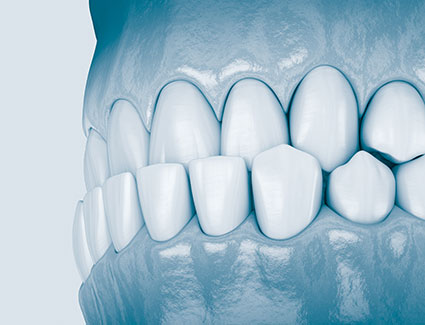
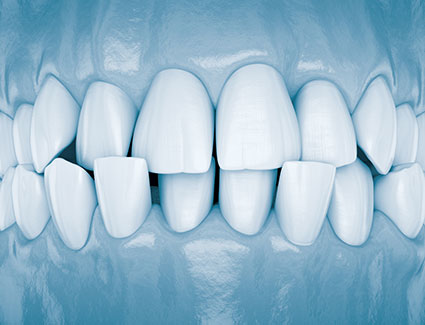
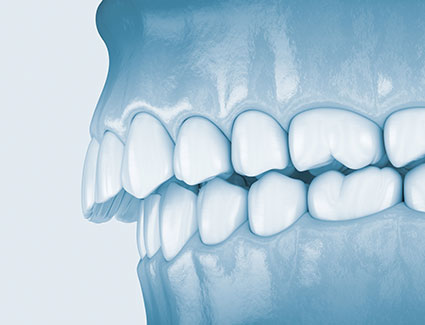
Kreuzbiss Crossbite
Überbiss Overbite
progene Verzahnung | Unterbiss progenic bite | underbite

Early orthodontic treatment

Tooth and jaw misalignments do not grow out on their own.
But when is the ideal time to have a malocclusion corrected?
In general, the earlier treatment is started, the less complicated and more successful it can be.
In this way, more costly therapies can often be avoided in the future.

The sooner, the better...

When severe dental malocclusions become apparent in young children, there is no time to lose. Typical reasons for early treatment in children are crossbite, severe overbite or a so-called progenic bite, in which the lower jaw grows too far forward.
In addition to speech problems, these pronounced malocclusions can also lead to difficulties biting and chewing food.
The resulting incorrect loading of the temporomandibular joints causes long-term pain. In addition, the teeth are then worn incorrectly, which can cause massive problems, especially during the change of teeth: The permanent teeth should remain functional until old age!
Colleagues from general dental practices refer children with these abnormalities from the age of 4. Otherwise, it is usually sufficient if the first visit to the orthodontist takes place when the child is about 7 years old.


Milchzähne

Space maintainer in case of premature loss of baby teeth

Early orthodontic treatment can also make sense if children lose a baby tooth at a very early age.
A space maintainer can help and facilitate the subsequent eruption of the permanent tooth. Narrow spaces and unfavorable tooth displacements can thus be avoided.

daumenlutschen

Breaking sucking habits

We have a wide range of individualized options and help break harmful habits such as thumb sucking.
Treatment can be useful from as early as age 2. Through our many years of experience, we can distinguish questionable habits from harmless ones.

Questions & Answers

When should my child see an orthodontist?

An initial orthodontic assessment can be useful if tooth or jaw misalignments become noticeable.

Examples include crossbite, pronounced overbite, underbite, very early loss of baby teeth or persistent thumb sucking.

If there are clear signs, a check-up may be useful from around the age of 4. In many cases, a first visit to the orthodontist around the age of 7 is sufficient.

When is early orthodontic treatment useful?

Early treatment can be useful when pronounced misalignments appear in early childhood.

Typical examples are crossbite, pronounced overbite, underbite or unfavorable sucking habits.

The aim is to influence unfavorable development early and, where possible, avoid more complex treatment later on.

What happens with an overbite or crossbite?

With an overbite or crossbite, we assess how the teeth and jaws fit together.

Depending on the findings, removable or fixed appliances may be used to guide growth and tooth position in a favorable way.

Does health insurance cover the costs for children?

For children and teenagers, statutory health insurance covers orthodontic treatment if there is a medically justified indication.

The assessment is based on orthodontic indication groups, known as KIG. As a rule, costs can be covered from KIG 3 onward.

For approved treatment, the practice bills 80 percent of the costs directly to statutory health insurance. If a sibling is also undergoing orthodontic treatment at the same time, this can be 90 percent. The remaining patient contribution is initially paid by the parents and calculated per quarter. After successful completion of treatment, this contribution can be reimbursed by the health insurance provider.

How can I recognize tooth or jaw misalignment in my child?

Signs can include crooked or crowded teeth, an unusual bite or mouth breathing.

Speech problems, difficulties biting or chewing, and habits such as thumb sucking can also be signs. If parents are unsure, an early check-up is better than waiting too long.